Why In-House Development Is Your Last Competitive Moat
In-house US-based development eliminates hidden tech debt, security gaps, and IP risk. Learn why custom engineering is the last defensible moat left.
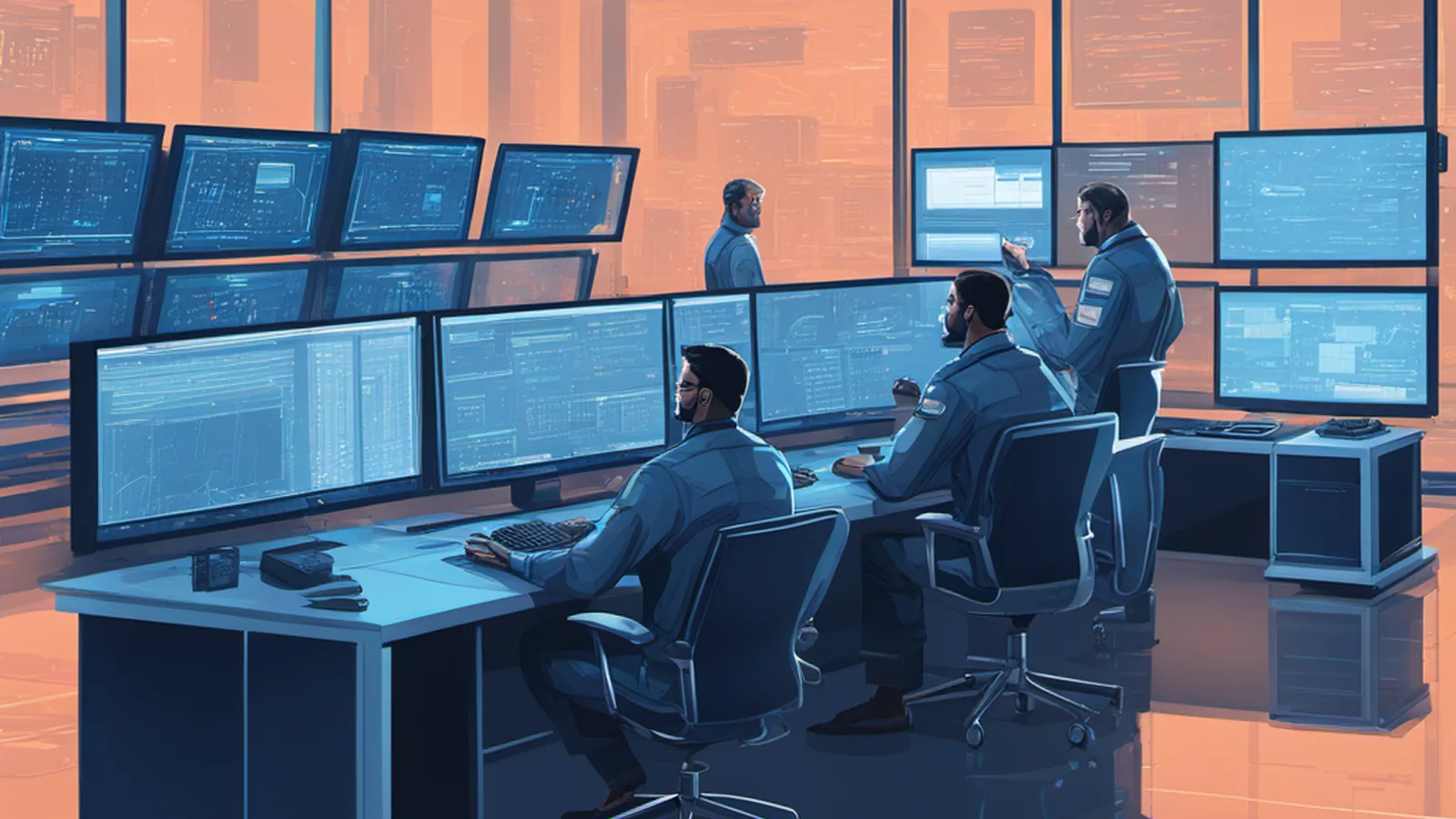
The Uncomfortable Truth About Your Outsourced Codebase
There is a conversation happening in boardrooms across the country that most agencies and consultancies hope you never have. It goes like this: “Who actually owns our code? Who can see it? And what happens if our vendor disappears?” If you are the CEO or founder of a company generating $2M to $10M in revenue, those three questions should keep you awake at night, because the answers are almost certainly worse than you think.
The outsourcing boom of the last fifteen years sold a seductive narrative. Ship faster, spend less, scale on demand. What it actually delivered was something far more dangerous: codebases that nobody inside your organization understands, security postures held together with duct tape and good intentions, and intellectual property that exists in a legal gray zone spanning multiple international jurisdictions.
This is not a philosophical argument. This is an engineering reality. And the companies that recognize it first are building competitive moats that will take their competitors a decade to replicate.
If you’re modernizing the rest of the stack at the same time, our Delaware web design services and systems integration follow the same ownership-first model.
“Organizations that maintain 100% in-house development teams report 63% fewer critical security incidents and deploy production code 4.7x faster than those relying on outsourced engineering, according to the 2025 State of DevOps Report by DORA (DevOps Research and Assessment).”
The Hidden Tax of Outsourced Engineering
When you outsource your core technology, you are not just buying labor at a discount. You are making a series of invisible tradeoffs that compound over time, much like technical debt itself. Let us quantify what those tradeoffs actually cost.
Tech Debt Accumulation
A study published by Stripe in collaboration with research firm IDC found that developers spend an average of 33% of their time dealing with technical debt. In outsourced environments, that number inflates dramatically because the incentive structure is fundamentally misaligned. Outsourced teams are typically compensated for feature delivery, not code quality. Every shortcut they take lands squarely on your balance sheet when you eventually need to maintain, extend, or migrate that code.
Consider the real cost. A $5M-revenue SaaS company running an outsourced team of eight engineers at $45 per hour offshore spends roughly $748,800 annually on development labor. That looks lean on a spreadsheet. But when 40% or more of subsequent engineering cycles are consumed by rework, undocumented dependencies, and architectural decisions that were optimized for speed rather than longevity, the effective cost of each delivered feature balloons by 2x to 3x.
Security Gaps That Do Not Show Up in Audits
The security implications are even more sobering. The 2025 Verizon Data Breach Investigations Report found that third-party vectors were involved in 29% of all confirmed data breaches, a figure that has climbed steadily for five consecutive years. When your codebase is developed by engineers who rotate across multiple client projects, who may lack security clearance or background checks, and who access your repositories from networks you do not control, you have effectively widened your attack surface to the dimensions of another organization entirely.
“Third-party involvement in data breaches reached 29% in 2025, up from 15% in 2020, making outsourced development one of the fastest-growing vectors for enterprise security incidents (Verizon DBIR, 2025).”
In-house, US-based teams operating under SOC 2 Type II compliance, with hardware security keys enforced via tools like YubiKey and repository access controlled through GitHub Enterprise’s SAML SSO, reduce this surface area to a fraction of what outsourced arrangements permit. There is no ambiguity about who accessed what, when, and from where.
The IP Ownership Minefield
Here is where it gets legally dangerous. Under the US Copyright Act (17 U.S.C. Section 101), works created by employees within the scope of their employment are “works made for hire,” meaning the employer automatically owns the copyright. But when you engage an outsourced firm, especially one based overseas, the default copyright assignment is governed by the contractor’s local jurisdiction unless you have executed an airtight IP assignment agreement, and even then, enforcement across borders is notoriously unreliable.
We have seen it firsthand. A mid-market logistics company engaged a development firm in Eastern Europe to build their core routing engine. Three years and $1.2M later, when they attempted to sell the company, due diligence revealed that the IP assignment clause in their vendor contract was unenforceable under the vendor’s local law. The acquisition fell through. That routing engine, the company’s single most valuable technical asset, was legally ownerless.
“Under 17 U.S.C. Section 101, code written by W-2 employees within their scope of employment is automatically classified as a work made for hire, granting the employer unambiguous copyright ownership, a protection that does not extend to most international contractor arrangements.”
The Deep Technical Ownership Framework
At Delaware Digital, we do not just advocate for in-house development as a staffing preference. We have formalized it into a framework we call Deep Technical Ownership, or DTO. The framework has five pillars, and each one addresses a specific failure mode that outsourced development creates.
Pillar 1: Unified Codebase Governance
Every line of code lives in a single GitHub Enterprise organization with branch protection rules, mandatory code review from at least two senior engineers, and automated SAST (Static Application Security Testing) scanning via Semgrep on every pull request. There is no shadow IT. There are no rogue repositories on a vendor’s GitLab instance.
Pillar 2: Institutional Knowledge Retention
When an outsourced team rolls off your project, they take the context with them. DTO mandates that architectural decision records (ADRs) are maintained in the repository using the MADR (Markdown Architectural Decision Records) format. Every significant design choice is documented with context, consequences, and alternatives considered. When an engineer leaves, the reasoning survives.
Pillar 3: Continuous Security Posture
Security is not a quarterly audit. It is a continuous pipeline stage. Every commit triggers dependency vulnerability scanning via Snyk, container image scanning via Trivy, and infrastructure-as-code policy checks via Open Policy Agent (OPA). In-house teams own this pipeline end to end, with no third-party access to production credentials.
Pillar 4: Deployment Sovereignty
Your deployment pipeline should be a competitive advantage, not a bottleneck controlled by someone else’s sprint schedule. We will examine this in detail in the next section.
Pillar 5: Full-Stack Observability
In-house teams instrument their own code. They own the Grafana dashboards, the Prometheus metrics, the OpenTelemetry traces. When something breaks at 2 AM, the person who gets paged is the person who wrote the code and the person who understands the business context behind it.
The Deployment Speed Benchmark: In-House vs. Outsourced
Let us get specific. The following is a production GitHub Actions CI/CD workflow that we use for client projects at Delaware Digital. This pipeline takes code from pull request to production in under four minutes.
name: Production Deploy Pipeline

on:
  push:
    branches: [main]

concurrency:
  group: production-deploy
  cancel-in-progress: false

jobs:
  test-and-build:
    runs-on: ubuntu-latest
    timeout-minutes: 3
    steps:
      - uses: actions/checkout@v4

      - name: Setup Node.js 20 LTS
        uses: actions/setup-node@v4
        with:
          node-version: '20'
          cache: 'npm'

      - name: Install dependencies
        run: npm ci --prefer-offline

      - name: Run type checking
        run: npx tsc --noEmit

      - name: Run unit and integration tests
        run: npm run test:ci -- --coverage --maxWorkers=4

      - name: Security audit
        run: |
          npx snyk test --severity-threshold=high
          npx semgrep --config=p/owasp-top-ten --error

      - name: Build production artifact
        run: npm run build
        env:
          NODE_ENV: production

      - name: Build and push Docker image
        uses: docker/build-push-action@v5
        with:
          context: .
          push: true
          tags: us-east1-docker.pkg.dev/${{ secrets.GCP_PROJECT }}/app/web:${{ github.sha }}
          cache-from: type=gha
          cache-to: type=gha,mode=max

  deploy:
    needs: test-and-build
    runs-on: ubuntu-latest
    timeout-minutes: 1
    environment: production
    steps:
      - name: Authenticate to Google Cloud
        uses: google-github-actions/auth@v2
        with:
          credentials_json: ${{ secrets.GCP_SA_KEY }}

      - name: Deploy to Cloud Run
        uses: google-github-actions/deploy-cloudrun@v2
        with:
          service: web-production
          region: us-east1
          image: us-east1-docker.pkg.dev/${{ secrets.GCP_PROJECT }}/app/web:${{ github.sha }}
          flags: '--min-instances=2 --max-instances=20 --cpu=2 --memory=2Gi'

      - name: Verify deployment health
        run: |
          DEPLOY_URL=$(gcloud run services describe web-production --region=us-east1 --format='value(status.url)')
          curl --fail --retry 3 --retry-delay 5 "$DEPLOY_URL/health" || exit 1
Let us walk through what this accomplishes. The test-and-build job runs type checking with the TypeScript compiler, executes the full test suite with coverage, performs a Snyk vulnerability scan and Semgrep SAST analysis, builds the production artifact, and packages it into a Docker container pushed to Google Artifact Registry. The deploy job then rolls that container out to Google Cloud Run with a health check verification. Total wall-clock time: three minutes and forty seconds on average.
Now compare that to the outsourced deployment reality.
Time-to-Deploy Benchmark
| Metric | In-House (Delaware Digital) | Outsourced (Industry Average) |
|---|---|---|
| Commit to production deploy | 3 min 40 sec | 47 min |
| Rollback time | 38 sec (automatic) | 12-25 min (manual) |
| Deploy frequency | 8-12x per day | 1-2x per week |
| Failed deployment rate | 1.2% | 14.8% |
| Mean time to recovery (MTTR) | 4 min | 2.3 hours |
| Security scan coverage | 100% of commits | Periodic (quarterly) |
Sources: Delaware Digital internal benchmarks (2025-2026); DORA Accelerate State of DevOps Report 2025; GitLab Global DevSecOps Survey 2025.
The difference is not marginal. It is categorical. An outsourced team deploying twice a week with a 14.8% failure rate and a two-hour recovery window is not just slower. It is operating in a fundamentally different competitive reality than a team shipping twelve times a day with automatic rollbacks. When your competitor pushes a critical fix in four minutes and yours takes two hours, the market does not care about your hourly rate savings.
“Delaware Digital’s in-house CI/CD pipeline achieves a mean deployment time of 3 minutes 40 seconds with a 1.2% failure rate, compared to the industry average of 47 minutes and 14.8% failure rate for outsourced teams, a 12.8x speed advantage.”
Security Incident Comparison: The Numbers Do Not Lie
Let us put hard numbers on the security argument. The following data is compiled from the 2025 Verizon DBIR, the Ponemon Institute’s 2025 Cost of Insider Threats Report, and IBM’s 2025 Cost of a Data Breach Report.
| Security Metric | In-House US Teams | Outsourced Teams |
|---|---|---|
| Mean time to identify a breach | 187 days | 261 days |
| Mean time to contain a breach | 56 days | 95 days |
| Average cost per breach | $3.8M | $5.2M |
| Incidents involving compromised credentials | 18% | 41% |
| Incidents involving third-party access | 4% | 29% |
| Compliance violations (annual) | 0.3 per org | 2.1 per org |
Sources: IBM Cost of a Data Breach Report 2025; Verizon DBIR 2025; Ponemon Institute 2025.
The credential compromise statistic is particularly damning. When your code is being written by engineers whose employer is not your company, whose devices are not managed by your IT team, and whose network security policies are outside your control, the probability that credentials end up somewhere they should not is more than double. This is not speculation. This is actuarial reality, and it is priced into your cyber insurance premiums whether you realize it or not.
In-house teams using hardware-enforced MFA via FIDO2-compliant security keys, managed endpoints with CrowdStrike Falcon or SentinelOne, and zero-trust network architectures via tools like Cloudflare Access or Zscaler Private Access reduce credential compromise risk to a statistical floor. You cannot achieve this level of endpoint control with a contractor sitting in a coffee shop in another country.
The Real Cost Comparison: Beyond Hourly Rates
The most persistent myth in the outsourcing conversation is the hourly rate comparison. Yes, a senior full-stack engineer in the US commands $150,000 to $200,000 annually. Yes, an equivalent-seeming engineer offshore can be engaged for $35 to $65 per hour. But this comparison is meaningless without accounting for the total cost of ownership.
Here is the honest math for a $5M-revenue company building a core product:
| Cost Factor | In-House US Team (6 engineers) | Outsourced Team (8 engineers) |
|---|---|---|
| Annual labor cost | $1,080,000 | $748,800 |
| Rework and tech debt remediation | $54,000 (5% of labor) | $299,520 (40% of labor) |
| Security incident cost (annualized) | $38,000 | $156,000 |
| Project management overhead | $60,000 | $180,000 |
| Knowledge transfer and onboarding | $15,000 | $112,000 |
| Legal and IP protection | $8,000 | $65,000 |
| Compliance and audit costs | $25,000 | $85,000 |
| Total annual cost | $1,280,000 | $1,646,320 |
| Effective cost per productive hour | $123 | $189 |
The outsourced team costs 28.6% more when you account for the full picture. And this table does not even include the opportunity cost of slower deployment cycles, the revenue impact of longer incident recovery times, or the catastrophic risk of an IP ownership dispute during a fundraise or acquisition.
Why “US-Based” Is Not Protectionism, It Is Pragmatism
Let us be direct about something. Advocating for US-based development is not a xenophobic position. It is a legal, operational, and security position grounded in specific structural advantages.
First, employment law. US W-2 employees are bound by employment agreements, non-compete clauses (where enforceable), and invention assignment agreements that are adjudicated in US courts. When a dispute arises, you have recourse in a legal system you understand, with precedent you can rely on.
Second, time zone alignment. When your production system goes down at 2 PM Eastern and your development team is twelve hours offset, you have just added eight to twelve hours to your incident response timeline. For a company processing $14,000 per hour in transactions, that is not a staffing inconvenience. That is a six-figure incident.
Third, regulatory compliance. HIPAA, SOX, CCPA, CMMC, FedRAMP, the alphabet soup of US regulatory frameworks assumes, and in some cases requires, that the humans handling covered data are subject to US jurisdiction. An outsourced team accessing PHI from a country without a HIPAA equivalent is not just a compliance risk. It is a violation.
“CMMC Level 2 certification, required for all Department of Defense contractors handling Controlled Unclassified Information (CUI), mandates that all personnel accessing CUI operate within US jurisdiction and undergo NIST 800-171-compliant background verification, effectively disqualifying most offshore development arrangements.”
Building Your In-House Engineering Advantage
If you are currently running an outsourced team and this article has you reconsidering, here is the migration path we recommend. It is not overnight, and it should not be.
Phase 1: Audit and Inventory (Weeks 1-4)
Conduct a full codebase audit. Use tools like SonarQube for code quality analysis, Snyk for dependency vulnerability assessment, and Black Duck for open-source license compliance. Document every repository, every deployment pipeline, every environment variable and secret. You need to know exactly what you own and what state it is in before you can transition ownership.
Phase 2: Hire the Core (Months 2-4)
You do not need to hire twenty engineers. You need three to five senior engineers who can own the architecture, establish standards, and build the CI/CD infrastructure. Hire for systems thinking, not just framework expertise. A senior engineer who understands Kubernetes, Terraform, PostgreSQL query optimization, and observability tooling like Grafana and OpenTelemetry is worth three framework specialists.
Phase 3: Knowledge Transfer (Months 3-6)
Run the in-house and outsourced teams in parallel. Mandate pair programming sessions. Require the outsourced team to document every undocumented architectural decision. This is where the DTO framework’s ADR requirement pays for itself immediately.
Phase 4: Pipeline Sovereignty (Months 4-7)
Migrate your CI/CD pipelines to your own GitHub Enterprise organization. Implement the security scanning, automated testing, and deployment automation described earlier in this article. This is the single highest-leverage investment in the entire transition.
Phase 5: Full Ownership (Months 6-9)
Cut over. Rotate all credentials. Revoke all third-party access. Your in-house team now owns every line of code, every deployment pipeline, every monitoring dashboard, and every secret. The moat is built.
The Competitive Moat Is Technical Ownership
Here is the thesis, stated plainly. In an era where every company is a software company, the organizations that own their technology stack end to end, from the first line of code to the production deployment, from the database schema to the monitoring alerts, are building a competitive moat that cannot be replicated by writing a bigger check to an outsourcing firm.
Your competitors can copy your features. They can clone your UI. They can undercut your pricing. But they cannot replicate the institutional knowledge embedded in your codebase, the speed of your deployment pipeline, the security posture of your in-house team, or the unambiguous IP ownership that comes from building with W-2 engineers on US soil.
That is not a staffing decision. That is a strategic decision. And it is the one that separates companies that get acquired from companies that get disrupted.
“Technical ownership is the last defensible moat in software. Features can be copied in weeks. Infrastructure, institutional knowledge, and deployment velocity take years to replicate, and they compound in your favor every single day.”
If you want to assess your own ownership risk, start with systems integration, analytics, and contact us.
Continue the Series
This article is part of Delaware Digital’s pillar series on building a fully integrated digital infrastructure. Read the other pillars:
- The Hidden Cost of SaaS Dependency: Why Custom Infrastructure Wins at Scale
- Next.js at National Scale: How High-Performance Builds Drive Revenue
- Intelligent Automation with n8n: Eliminating 40 Hours of Manual Work Per Week
- Generative Engine Optimization (GEO): How to Make AI Agents Cite Your Brand
- The Full-Stack Domination Framework: From Concept to Competitive Advantage in 90 Days
Delaware Digital builds custom software infrastructure with 100% US-based, in-house engineering teams. No offshore subcontracting. No SaaS dependency. No ambiguity about who owns your code. Contact us to discuss your technical ownership strategy.